
Why Shark Teeth in Kids Rarely Need Panic
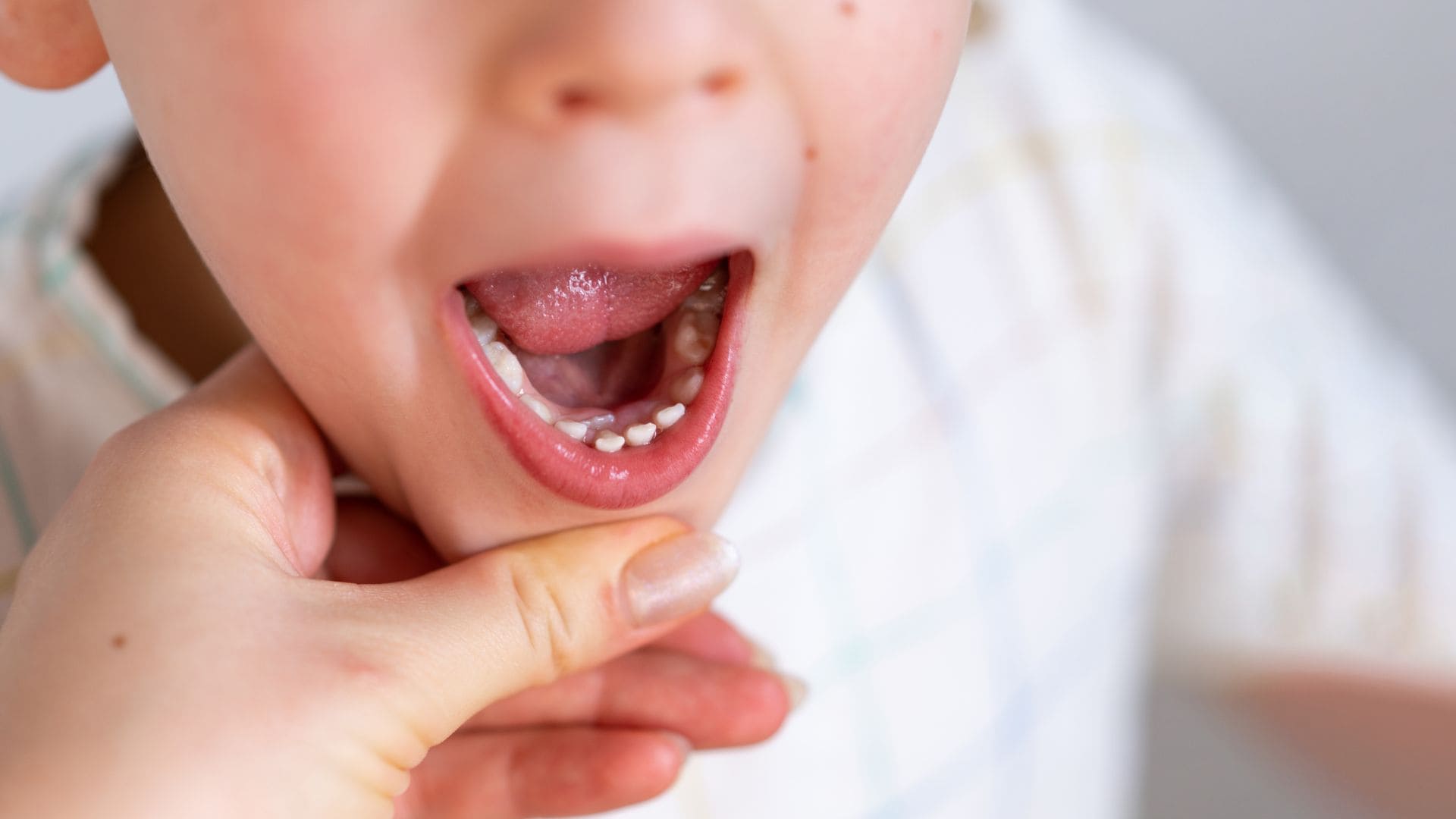
Seeing two rows of teeth in your child’s mouth can be surprising. In many cases, however, shark teeth in kids are a temporary part of the transition from baby teeth to permanent teeth.
The term “shark teeth” describes a permanent tooth erupting behind a baby tooth that has not fallen out yet. It often looks more alarming than it is, particularly when the new teeth appear along the lower front of the mouth.
Some cases can simply be monitored while the baby tooth becomes loose. Others need a dentist to check whether the retained tooth, available space, or eruption path could interfere with how the permanent tooth settles into position.
What Are Shark Teeth, Exactly?
Shark teeth are not a special type of tooth or an additional set of teeth. They are permanent teeth growing in while the corresponding primary, or baby, teeth remain in place.
The result is a temporary double row. The baby tooth is usually positioned toward the lips, while the permanent tooth appears farther back toward the tongue.
This most commonly becomes noticeable when the lower permanent incisors begin erupting. Lower central incisors typically erupt around ages six to seven, while the upper central incisors commonly follow around ages seven to eight. Individual eruption timelines vary, so a child being somewhat earlier or later does not automatically indicate a problem.
Are Shark Teeth Normal?
Shark teeth can occur during the mixed-dentition stage, when children have a combination of primary and permanent teeth. They do not automatically mean that anything is seriously wrong.
In many cases, the baby tooth gradually becomes loose and falls out. Once it is gone, the permanent tooth may move forward as the tongue, lips, jaw growth, and normal oral forces influence its position.
However, parents should not assume that every double row will correct itself in exactly the same way. Available space, crowding, the angle of eruption, and the condition of the baby tooth all affect what happens next.
Why Does This Happen?
The most straightforward explanation is timing. The permanent tooth starts moving upward, but the root of the deciduous tooth has not resorbed quickly enough to get out of the way.
In some children, the permanent teeth simply come in slightly off-angle, missing the root of the baby tooth entirely. Without that pressure to dissolve the root, the baby tooth stays firmly planted while the adult tooth finds another path out.
Why Do Permanent Teeth Grow Behind Baby Teeth?
Under normal circumstances, an incoming permanent tooth helps dissolve, or resorb, the root of the baby tooth above it. As the root becomes shorter, the baby tooth loosens and eventually falls out.
Sometimes the permanent tooth does not erupt directly beneath the baby tooth’s root. It may travel along a path slightly behind it instead. Because the incoming tooth is not putting the expected pressure on the root, the baby tooth may remain in place longer than expected.
Other factors that may contribute include:
- Limited room in the dental arch
- The angle of the incoming permanent tooth
- A baby tooth with a root that has not resorbed normally
- Previous injury or treatment involving the baby tooth
- Differences in the child’s normal eruption pattern
- A baby tooth that has become attached to the surrounding bone
- An additional or supernumerary tooth affecting eruption
A dentist may recommend an examination or dental X-ray when the eruption pattern is unusual, significantly uneven, or associated with an over-retained baby tooth. The American Academy of Pediatric Dentistry notes that the treatment of ectopically erupting teeth depends on the underlying cause.
Should You Call a Dentist Right Away?
Not necessarily, but you should keep an eye on it. In most cases, once the permanent tooth starts pushing through, the deciduous tooth will loosen and fall out within a few weeks.
A dentist visit becomes more important if the baby tooth shows no signs of loosening after two months, if your child is in pain, or if the new tooth is growing in at a significant angle. Pediatric dentistry exists precisely for these kinds of situations – a quick assessment can tell you whether to wait it out or take action.
When Is a Dental Extraction Needed?
Dental extraction is sometimes recommended when the baby tooth is stubborn. This is a simple, routine procedure in pediatric dentistry that takes only minutes. The goal is to give the permanent tooth enough space to move into its correct position naturally.
Leaving a shark tooth situation unaddressed for too long can occasionally affect alignment, which is something orthodontics may need to correct down the road. Catching it early through regular dental checkups with a dentist makes a real difference.
What Parents in Edmonton Should Watch For
If you notice shark teeth in your child, here are the practical things to monitor:
- Whether the baby tooth is at all wiggly
- How long the double row has been present
- Whether your child has any discomfort while chewing or speaking
- The angle of the incoming permanent tooth
Encouraging your child to wiggle the loose tooth with their tongue can help speed things along. A diet that includes crunchy foods like apples and carrots also helps.
Frequently Asked Questions
At what age do shark teeth usually appear?
They are often noticed around ages six or seven, when the lower front permanent teeth begin erupting and the corresponding baby teeth are expected to loosen. They may appear at other stages of mixed dentition as well.
Why is the adult tooth growing behind the baby tooth?
The permanent tooth may be following a path that does not place enough pressure directly beneath the baby tooth’s root. As a result, the root may not dissolve as quickly as expected and the baby tooth remains in place.
Will the permanent tooth move forward?
It may. Once the baby tooth falls out or is removed, natural oral forces and continued jaw growth can help the permanent tooth move toward the dental arch. Movement is less predictable when the mouth is significantly crowded.
How long should I wait before calling a dentist?
You do not need to wait for a specific number of weeks. Call when the baby tooth is firm, the permanent tooth has erupted substantially, the child is uncomfortable, or you are concerned about the tooth’s angle or available space.
Can my child wiggle the baby tooth?
Yes, provided that it is already loose and your child uses gentle pressure. Do not force a firmly attached tooth.
Should my child eat apples to make the tooth fall out?
There is no need to use hard or crunchy foods as an extraction method. Let your child eat foods they can chew comfortably, and avoid forcing a painful or firmly attached tooth.
Do shark teeth hurt?
They may cause mild pressure or gum tenderness, but significant or persistent pain should be checked. Pain can also come from decay, gum inflammation, trauma, or another problem unrelated to normal eruption.
Can shark teeth affect speech?
A temporary double row usually does not cause a lasting speech problem. An unusually positioned tooth, severe crowding, or broader bite concern may affect how the tongue moves, so mention any noticeable speech changes during the dental visit.
Does the baby tooth always need to be removed?
No. A loose baby tooth may fall out naturally. Extraction is considered when it remains in the way, has dental disease, causes symptoms, or interferes with the permanent tooth’s eruption.
When Shark Teeth in Kids Need a Dentist
Shark teeth are startling to see, but they are rarely a dental emergency. The key is staying informed and keeping up with your child’s regular dental checkups. If you are in Edmonton and want a professional eye on your child’s smile, our pediatric dentistry services are here to help. Call us at 780-463-8803 to schedule a visit with our team – because catching small concerns early is always better than waiting.
