
How Long Does Dental Freezing Last After Your Visit?
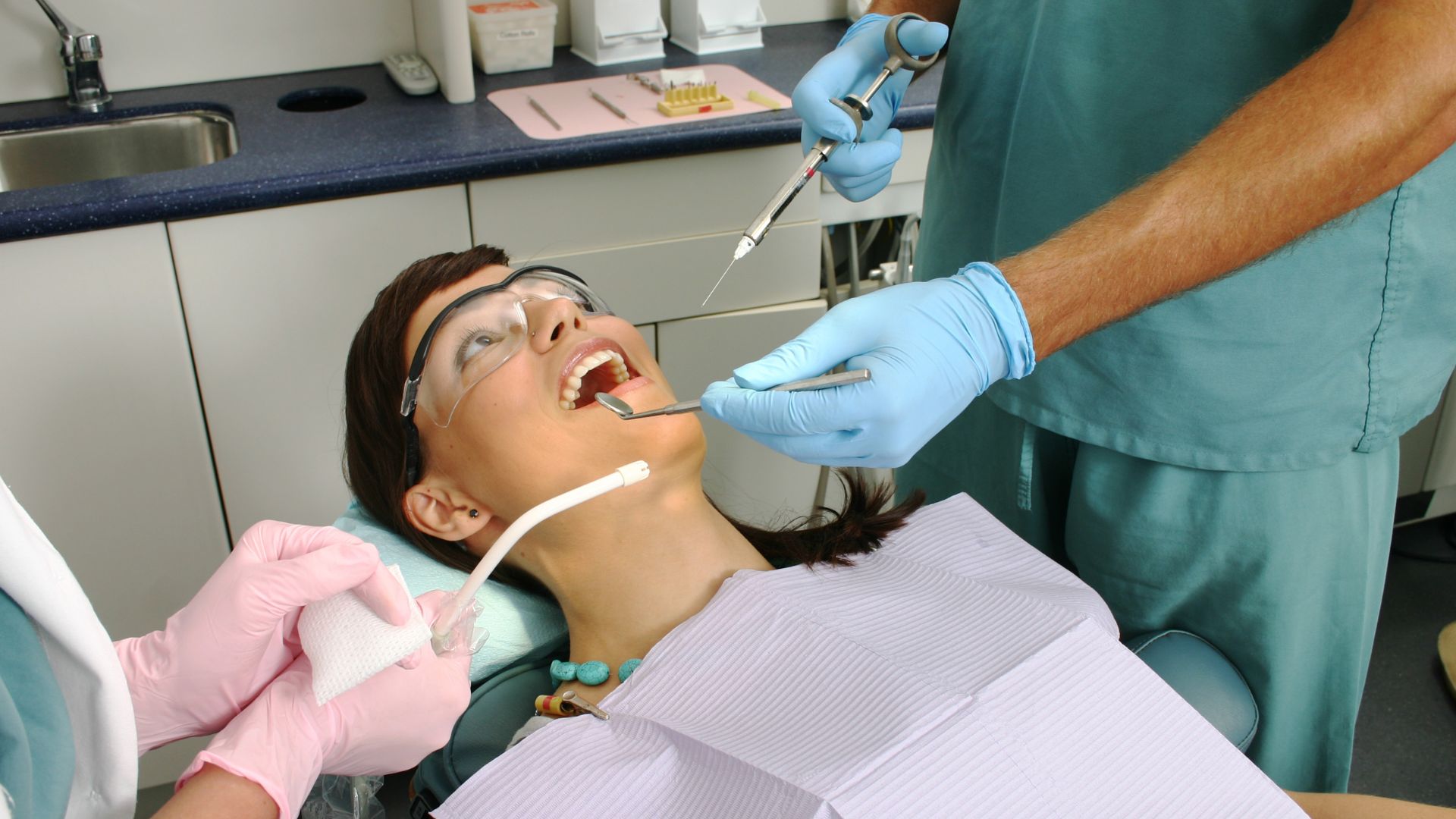
If you’ve ever left a dental clinic with a numb lip, a heavy jaw, and no idea when you’d be able to eat again, you’re not alone. Dental freezing is one of those things that most patients experience but few fully understand. How long does it last? Why does it sometimes wear off faster for some people than others? And what can you actually do while you’re waiting?
Let’s break it all down in plain language.
What Is Dental Freezing, Exactly?
Dental freezing is a form of local anesthesia – a medication your dentist injects into the gum or inner cheek to block nerve signals in a specific area of your mouth. The goal is simple: to make sure you feel no pain during your procedure.
The most commonly used local anesthetic is lidocaine, though some clinics still use procaine-based formulas. These medications work by temporarily interrupting the nerve’s ability to send pain signals to your brain. It’s targeted, fast-acting, and highly effective.
The injection itself usually takes just seconds, and numbness sets in within a few minutes. Most patients are fully frozen before the dentist even picks up a tool.
How Long Does Dental Freezing Last?
Here’s the honest answer: it depends. Most patients experience numbness for anywhere between one and five hours after a dental procedure. That’s a wide range, and it comes down to a few key factors.
The Type of Procedure You Had
Different procedures require different depths and amounts of anesthetic. A simple filling might call for a lighter dose, while root canal treatment or a complex extraction might require a stronger or longer-lasting formula. The more anesthetic used, the longer the freezing tends to linger.
Where in Your Mouth the Injection Was Given
The lower jaw – technically called the mandible – tends to stay frozen longer than the upper jaw (the maxilla). Anesthetic injected near the lower-jaw nerves can take longer to wear off. Upper teeth and the surrounding gums often regain feeling faster.
Your Individual Biology
Your circulatory system, metabolism, and even body weight can influence how quickly your body breaks down and clears the medication. Some patients are back to full feeling within an hour. Others are still numb three to four hours later. Neither is abnormal.
Anxiety and Stress
Interestingly, dental fear and anxiety can tighten muscles and affect blood flow, which may slightly impact how your body responds to anesthesia. Patients who are more relaxed during their dental appointment may experience more predictable numbness.
What Does Freezing Feel Like as It Wears Off?
Most patients describe the return of feeling as a gradual tingling – almost like pins and needles moving through the lip, tongue, and cheek. This is completely normal and just means the nerve is waking back up.
In rare cases, patients experience a condition called paresthesia – an extended or altered sensation in the mouth that can last longer than expected. This is uncommon and usually temporary, but it’s worth mentioning to your dentist if the numbness seems to persist well beyond five hours.
A related but less serious issue is hypoesthesia, which is a reduced (rather than absent) sensation. Again, this typically resolves on its own.
Tips to Help the Freezing Wear Off Faster
There are a few things that may help speed up the process, though no method is guaranteed.
Light exercise can increase circulation, which helps your body metabolize the anesthetic more quickly. A gentle warm compress applied to the outside of the jaw may also help improve blood flow to the area.
Some sources suggest that gently massaging the cheek or jaw near the injection site can help move things along. Your dental assistant may even show you how to do this safely before you leave the clinic.
What you should avoid is chewing on the frozen side of your mouth, touching the numb area constantly, or eating anything hot until full feeling returns. Without proper sensation, you risk biting your cheek, burning your tongue, or causing irritation to the gums without realizing it.
When to Be Concerned
Dental anesthesia is extremely safe, but like any medication, it can occasionally cause complications. If you notice that the numbness is spreading, if you’re experiencing significant swelling, or if the freezing hasn’t worn off after six or more hours, contact your dentist.
It’s also worth noting that certain underlying conditions – including infection near the tooth or issues related to the temporomandibular joint (TMJ) – can sometimes affect how well anesthesia works in the first place. If you’ve ever struggled with difficult freezing experiences, it’s worth discussing orofacial myofunctional disorders or TMJ treatment with your dental team before your next procedure.
How Long Will Your Dental Freezing Last?
Dental freezing typically lasts one to five hours, depending on the procedure, the injection site, and your individual metabolism. Understanding what’s happening in your body makes the experience far less unsettling. If you have concerns about anesthesia, tooth pain, or are dealing with something that might need root canal therapy, the team at Dr. Molly Rodgers Dental is here to help. Call us at 780-463-8803 to book an appointment and get the comfortable, informed care you deserve.
