
Difference Between TMJ and Trigeminal Neuralgia: How to Tell Jaw Pain From Nerve Pain
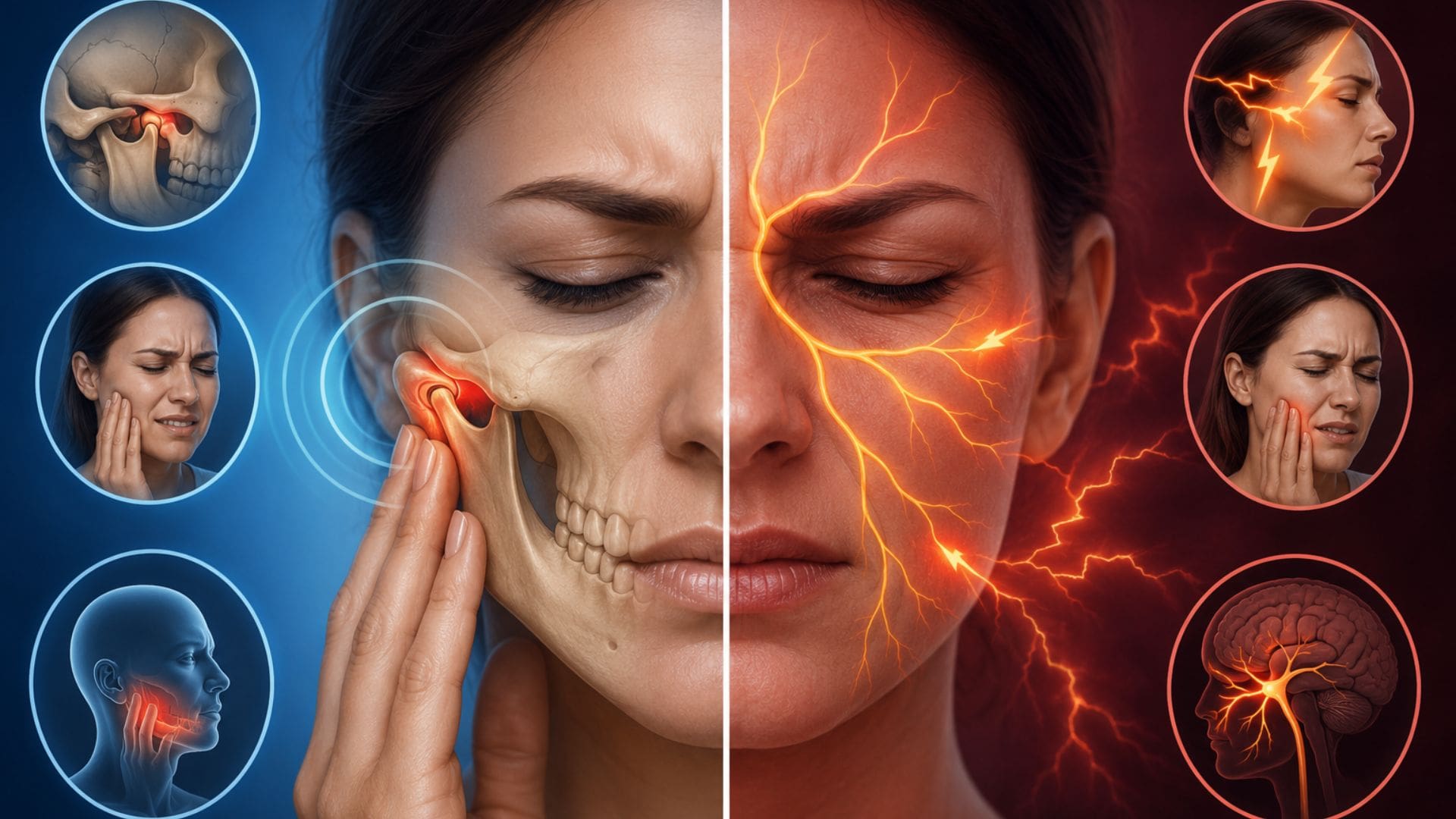
If you’ve been dealing with persistent jaw pain, facial discomfort, or unexplained jaw pain, facial pain, or chronic headaches, you’ve probably searched for your symptoms and found two terms come up often: TMJ disorder and trigeminal neuralgia. They can feel surprisingly similar on the surface, but they are very different conditions with very different causes and treatments.
Understanding the difference matters because a medical error in diagnosis can lead to months of ineffective treatment and unnecessary suffering. Let’s break this down in plain language.
What Is TMJ Disorder?
TMJ stands for temporomandibular joint, the hinge-like joint that connects your mandible (lower jaw) to your skull. Temporomandibular joint dysfunction, often shortened to TMD, refers to a group of conditions affecting the jaw joint, the muscles of mastication or the surrounding tissues.
TMJ pain typically shows up as a dull ache or soreness around the jaw, ear, or face. Patients often notice clicking or popping sounds when they open their mouth, limited jaw movement, headaches, and even sleep disorders linked to teeth grinding.
The causes are varied. Inflammation in the joint, muscle tension, bite misalignment, jaw injury, or stress-induced clenching can all contribute to temporomandibular joint dysfunction. Because the jaw connects to so many structures, TMJ pain can radiate to the neck, temples, and teeth – making diagnosis tricky.
What Is Trigeminal Neuralgia?
Trigeminal neuralgia is a chronic condition affecting the trigeminal nerve, one of the major cranial nerves responsible for sensation in the face, jaw, teeth, and mouth. When this nerve becomes irritated or compressed, it can send intense, sudden pain signals through the nervous system.
The pain associated with trigeminal neuralgia is often described as electric shock-like, stabbing, or burning. It usually strikes in brief episodes but can be debilitating enough to significantly reduce a patient’s quality of life. Unlike TMJ pain, which tends to be more constant and ache-like, trigeminal neuralgia pain tends to come in sharp bursts triggered by everyday activities like eating, speaking, or touching the face.
Trigeminal neuralgia is considered a form of neuropathic pain – meaning it originates in the nerve itself, rather than from muscle or joint damage. Conditions like multiple sclerosis or nerve injury can sometimes cause it, and in rare cases, a tumor or other abnormality near the trigeminal nerve may be involved.
Key Differences: TMJ vs. Trigeminal Neuralgia
This is where most people get confused. Both conditions involve orofacial pain and can affect similar areas of the face and jaw. But there are important distinctions in how each condition presents.
- Nature of the pain is one of the clearest distinguishing factors. TMJ disorder tends to produce a continuous, aching discomfort that worsens with jaw movement, chewing, or stress. Trigeminal neuralgia, by contrast, produces sudden, severe, shock-like episodes of pain that last only seconds to minutes but feel extreme in intensity.
- Triggers are also notably different. TMJ pain is often triggered by eating, clenching, wide yawning, or stress. Trigeminal neuralgia can be set off by the lightest touch – a breeze on the face, brushing teeth, or even talking.
- Location and spread differ too. TMJ pain tends to radiate from the jaw joint outward, involving the muscles and sometimes the ear or temples. Trigeminal neuralgia typically follows the path of the mandibular nerve or other branches of the trigeminal nerve, staying within specific facial zones.
- Associated symptoms give further clues. TMJ disorder often comes with jaw clicking, tooth pain, muscle tightness, and sleep disruption. Trigeminal neuralgia is primarily a sensory neuron condition, so it usually doesn’t come with joint noises or muscle tone changes in the jaw.
Why Accurate Diagnosis Is So Important
The differential diagnosis between these two conditions requires careful evaluation, and sometimes imaging like magnetic resonance imaging (MRI) to rule out blood vessel compression or other abnormalities near the brain.
Misdiagnosis is a real concern. Patients with trigeminal neuralgia have sometimes undergone unnecessary dental procedures because their tooth pain was mistaken for a dental problem.
Meanwhile, someone with TMJ disorder might be prescribed nerve block treatments or medication better suited for neuropathic pain, which won’t address the underlying joint and muscle issue.
An orofacial pain specialist or experienced dentist familiar with diagnosing and treating TMJ disorders can play a key role in sorting this out. In some cases, a referral to a medical doctor or neurologist may also be necessary, especially if trigeminal neuralgia or peripheral neuropathy is suspected.
Physical therapy, oral appliances, and lifestyle changes are commonly used for TMJ. Trigeminal neuralgia treatment tends to focus on medication, nerve block therapy, or in some cases surgical intervention.
When to See a Dentist in Edmonton
If you’re experiencing unexplained jaw pain, facial pain, or chronic headaches, don’t wait it out.
A thorough dental evaluation can help determine whether your symptoms point to temporomandibular joint dysfunction or something requiring neurological care.
At Dr. Molly Rodgers Dental, the team offers Headache Management and TMJ Care for patients dealing with jaw-related pain. If your symptoms suggest something beyond the joint, they’ll help guide you to the right specialist.
Knowing Whether It’s TMJ or Trigeminal Neuralgia
TMJ disorder and trigeminal neuralgia both cause orofacial pain, but they are fundamentally different in origin, character, and treatment. TMJ pain is rooted in the jaw joint and muscles, while trigeminal neuralgia stems from nerve irritation or compression. Getting the right diagnosis is essential to finding real relief. If you’re unsure what’s causing your jaw or facial pain, reach out to Dr. Molly Rodgers Dental and explore your TMJ and headache management options – your quality of life depends on it.
