
Dental Braces vs Invisalign: Which Is Better for Your Smile and Budget?
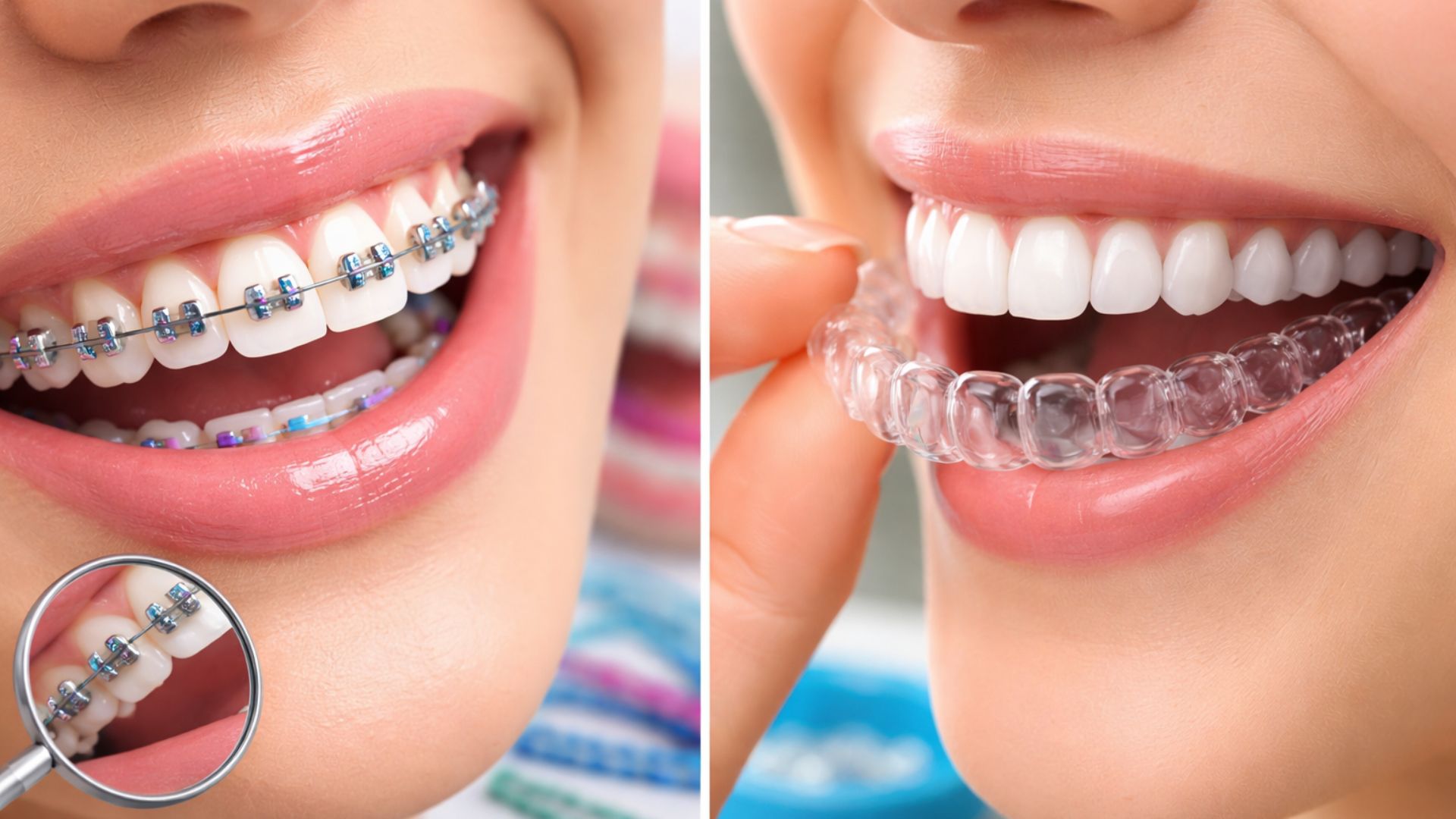
Choosing the right orthodontic treatment can feel overwhelming, especially with so many options like traditional braces and Invisalign® available today. If you’re in Edmonton and trying to decide between dental braces vs Invisalign, you’re probably wondering which option will deliver the best results for your smile, lifestyle, and budget.
Below, we’ll break down the key differences between braces and Invisalign, their pros and cons, treatment time, cost, and what factors to consider based on your specific orthodontic and dental needs. Let’s help you feel confident in your decision.
Invisalign vs Braces: Key Differences Between Braces and Clear Aligners
Braces and Invisalign are both popular orthodontic treatments designed to move teeth into better alignment. But how they do that, and what it’s like to wear them, can be very different.
Invisalign and Braces: What Are They?
Invisalign® uses a series of customized clear aligners made from soft plastic. These fit snugly over your teeth and apply consistent pressure to gradually shift them.
Traditional braces involve metal or ceramic brackets that are glued to each tooth, connected by a wire, with periodic adjustments by your orthodontist to guide movement.
Each option harnesses modern orthodontic technology, including 3D scanning and customized treatment plans, but the experiences are far from the same.
Pros and Cons of Invisalign
Identifying the pros and cons of Invisalign can help clarify whether “invisible braces” are right for you.
Pros
- Discreet appearance: The aligners are nearly invisible, making them ideal for adults and teens who feel self-conscious about their smile.
- Removable: Take them out when eating, drinking (except water), or brushing your teeth.
- No brackets or wires, which means no poking or irritation in your mouth.
Cons of Invisalign vs Braces
- Discipline required: You must wear the aligners 20 to 22 hours per day for them to be effective.
- Not ideal for severe orthodontic cases: Invisalign may struggle with complex dental or severe orthodontic issues, like significant rotations or deep malocclusion.
- More prone to loss or damage since they’re removable.
Pros and Cons of Braces
Traditional braces have stood the test of time. Here’s why they still work so well.
Pros
- Effective for complex orthodontic issues: Traditional braces and metal brackets and wires can fix even the most complex orthodontic cases.
- No risk of misplacing aligners since they’re fixed in place.
- Constant pressure moves teeth efficiently and steadily toward the target.
Cons
- More noticeable appearance, especially standard metal braces.
- Discomfort: You might experience irritation or sores from wires and brackets.
- Special care needed for oral hygiene: Braces can trap food, dental plaque, and require mindful tooth brushing and flossing.
Benefits of Braces: Why Traditional Braces May Be Better Than Invisalign
For certain patients, especially those with severe orthodontic needs or complex dental conditions, traditional metal braces may offer better control and faster improvements.
Some key benefits of braces include:
- Precise movement of individual teeth, thanks to adjustable brackets and wires
- Suitable for orthodontic cases involving overbite, crossbite, or tooth rotation
- Less dependent on patient adherence compared to aligners that can be removed
Traditional braces may also be more affordable than Invisalign treatment in some Edmonton clinics, depending on the length, materials, and complexity of your treatment plan.
Treatment Time and Predictability: Invisalign or Traditional Braces?
One of the most common questions during a consultation is, “Which takes longer?”
In general:
- Invisalign treatment typically lasts 12 to 18 months for mild to moderate cases.
- Traditional braces are typically worn for 18 to 24 months, but this varies based on severity.
That said, because braces are always working, unlike aligners that can be removed – traditional braces may offer more predictable results, especially for more complex orthodontic challenges.
However, some patients see faster treatment with Invisalign if they follow their treatment plan closely and wear each new set of aligners as directed by their orthodontist.
Appearance, Comfort, and Lifestyle
How your orthodontic appliance fits into everyday life is just as important as how well it works.
Invisalign Aligners
- Discreet: Almost invisible, perfect for image-conscious adults and teens.
- Smooth plastic: No metal to irritate your gums or cheeks.
- No food restrictions: Remove your aligners before eating or drinking.
Braces
- More visible, even with ceramic braces or clear braces.
- May cause discomfort from brackets and wires, especially after adjustments.
- Diet adjustments required: Avoid sticky, hard, or crunchy foods that can damage the appliance.
While Invisalign and braces both come with an adjustment period, some people find the clear aligners easier to live with day-to-day.
Oral Hygiene and Maintenance
Maintaining good oral health during orthodontic treatment is essential to avoiding complications like tooth decay, gum issues, or dental plaque buildup.
Braces and Oral Hygiene
- Braces can make it harder to brush and floss around brackets and wires
- Requires commitment to cleaning after meals and using tools like dental floss threaders
Invisalign and Hygiene
- Easier to brush and floss since aligners are removed
- Still essential to clean the aligners thoroughly to prevent bacteria buildup and avoid dental issues
Your orthodontist may recommend regular cleanings and checkups to support your oral hygiene, regardless of the treatment you choose.
Cost and Budget: Finding the Best Treatment for You
Orthodontic treatment is a significant investment. In Edmonton, the costs vary depending on the provider, case complexity, and duration.
Typical Ranges
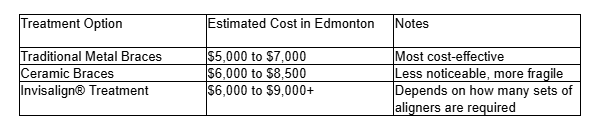
Some insurance plans cover part of the cost. A personalized treatment plan from your orthodontist will give you the most accurate idea based on the complexity of your case.
To make the process easier, many clinics (like ours in Edmonton) offer payment plans or financing options.
Who Is a Good Candidate for Each Treatment Option?
The right orthodontic treatment depends largely on what’s happening inside your mouth and what outcome you’re aiming for.
Invisalign might be better if you:
- Have mild to moderate misalignment
- Want a discreet option
- Will stick to wearing your aligners consistently
Braces may be ideal if you:
- Have complex orthodontic or severe orthodontic issues
- Don’t want to worry about remembering or losing aligners
- Need more precise adjustment capabilities
In some cases, alternatives like lingual braces (which are placed behind the teeth) or clear braces could also be considered.
If you’re unsure about what’s possible, a consultation focused on custom smile design can help illuminate the best path. Learn more about custom smile design here.
Invisalign vs Braces: Which One Is Right for You?
Deciding between braces vs Invisalign isn’t about finding the “better” method overall – it’s about choosing what’s better for you.
Here’s a quick summary:
- Effectiveness: Both straighten teeth, but braces are often more powerful for complex fixes.
- Appearance: Invisalign wins for aesthetics.
- Comfort and daily use: Aligners are removable, making them flexible but requiring discipline.
- Oral hygiene: Invisalign is easier to clean around.
- Cost: Braces may be more affordable, but consult your orthodontist for precision pricing.
Conclusion: Still Deciding Between Braces or Invisalign?
If you’re on the fence about dental braces vs Invisalign, we encourage you to speak with a trusted Edmonton orthodontist who can assess your teeth, gums, and jaw using advanced technology like 3D scanning. Each tooth and smile is unique, and your path to straighter teeth should be personalized to match.
Dr. Molly Rodgers and her dental team are here to guide you through the decision with honest insights, customized recommendations, and a commitment to your long-term oral health.
Whether you choose traditional braces and Invisalign, our focus is always achieving the healthiest, happiest smile for you.
Want to explore your options or get a second opinion? Book a consultation and take the first step toward your new smile.