
Is Diet Coke Bad for Your Teeth? What Dentists Want You to Know
If you’re wondering whether reaching for a diet soda like Diet Coke is a safer choice for your teeth than regular soda, you’re not alone. Many people assume that because diet drinks are sugar-free, they must be harmless. But when it comes to your oral health, the truth is a bit more complicated.
Let’s break it down so you can make informed decisions and help protect your teeth while enjoying your favorite beverage.
How Diet Coke and Other Diet Sodas Impact Your Tooth Enamel
Sugar-free doesn’t always mean safe for your smile. While Diet Coke skips the sugar that causes cavities, it still contains acid – and that’s where problems start.
Why Acid Matters for Your Teeth
Diet Coke contains phosphoric acid and citric acid – two ingredients known to erode tooth enamel over time. Our teeth are covered in enamel, the hard outer shell that protects the sensitive inner layers.
The acidity of diet sodas like Diet Coke weakens this enamel, potentially leading to:
- Tooth sensitivity
- Enamel erosion
- Tooth decay
Even without sugar, the acidic environment in your mouth after sipping a highly acidic drink like Diet Coke creates the perfect condition for enamel wear.
Diet Soda vs. Regular Soda: Are Sugar-Free Drinks Better for Your Teeth?
You might wonder if it’s better to drink diet soda instead of sugary drinks like regular soda or energy drinks. The answer is: it depends on what you’re trying to protect against.
Here’s a quick look:
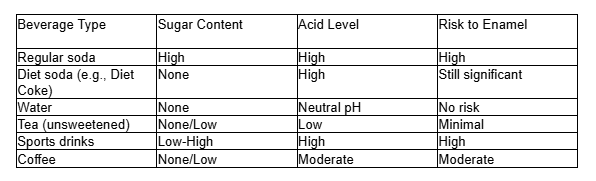
So while sugar-free drinks like diet soda won’t fuel the bacteria responsible for tooth decay the way sugary drinks do, the acid in them can still harm your teeth just as much as regular soda if consumed frequently.
The Science Behind Enamel Erosion from Soft Drinks
Acidity in diet sodas is the real culprit. When acid comes into contact with your teeth, it lowers the pH in your mouth. A lower pH means a more acidic environment, which can begin to dissolve the minerals in your enamel.
Some key acids in Diet Coke and similar beverages include:
- Phosphoric acid – commonly found in colas; adds tang but contributes to enamel wear.
- Citric acid – found in citrus-flavored drinks; also highly erosive.
- Tartaric acid – less common, but can appear in flavor-enhanced drinks or energy drinks.
This leads to a cycle of dental erosion, where the enamel gradually wears down over time, leaving your teeth vulnerable to sensitivity, cavity formation, and damage.
Does Drinking Diet Soda Cause Cavities?
Since diet sodas don’t contain sugar, they don’t directly “feed” the bacteria that lead to cavities.
But this doesn’t mean they’re cavity-proof.
Here’s how diet soda consumption still increases your risk:
- An acidic environment softens enamel.
- Weakened enamel is easier to penetrate.
- Less protection increases the risk of tooth decay and infection.
Even without sugar, frequent diet soda consumption can lead to cavity risk through enamel erosion. It’s a different pathway, but the result can be just as serious.
How to Protect Your Teeth if You Drink Diet Coke
We get it – sometimes you crave that fizzy hit of flavor. If you’re going to drink diet soda, there are smart ways to help protect your teeth:
Tips to Protect Your Enamel
- Use a straw to reduce contact with teeth.
- Drink water immediately after to rinse the acid away.
- Don’t brush your teeth immediately after consuming – wait at least 30 minutes to an hour to allow enamel to re-harden.
- Keep up with excellent oral hygiene, including brushing your teeth twice a day with fluoride toothpaste.
- Visit your dentist regularly for cleanings and general dentistry services like fluoride treatment: general dentistry services
Limiting soda consumption altogether is ideal for healthy teeth, but small habits can make a big difference if you choose to indulge.
Alternatives to Diet Coke That Won’t Harm Your Teeth
Looking for a better-for-your-teeth alternative to regular soda and diet sodas? Try these:
- Still or sparkling water (preferably plain)
- Unsweetened iced tea
- Herbal teas
- Homemade fruit-infused water
- Milk is great for tooth enamel due to its calcium content
These options not only help reduce acidity in the diet but also support your overall health and oral hygiene.
Signs Diet Drinks May Be Affecting Your Dental Health
Watch out for these warning signs that may indicate diet drinks may be affecting your dental health:
- Increased tooth sensitivity to hot or cold
- Yellowing (a sign of enamel erosion)
- Chipping or cracking teeth
- Frequent cavities or gum disease
- Persistent bad breath
If you’re experiencing any of these, schedule a consultation with a trusted Edmonton dentist for a personalized assessment and care plan.
The Final Word: Is Diet Coke Bad for Your Teeth?
Unfortunately, yes, Diet Coke can harm your teeth. While it’s sugar-free, the acids it contains are powerful enough to weaken enamel on your teeth. Over time, this leads to dental erosion, tooth decay, and potential gum disease if left unmanaged.
Practicing good dental hygiene, consuming acidic beverages in moderation, and being proactive with your oral care is essential to protect your smile.
Think your soda habit may be affecting your teeth? Want to learn more ways to keep your smile bright and healthy?
Try cutting back on your diet soda consumption, rinsing with water after drinking, and staying consistent with your oral hygiene routine.
And of course, regular checkups with an experienced dentist are key. For professional, friendly care in Edmonton, explore our general dentistry services and let us help you stay ahead of potential issues.
Your teeth do a lot for you. Let’s take care of them. Reach out now.