
Gum Infection Vs Tooth Infection: How To Tell The Difference And Why It Matters
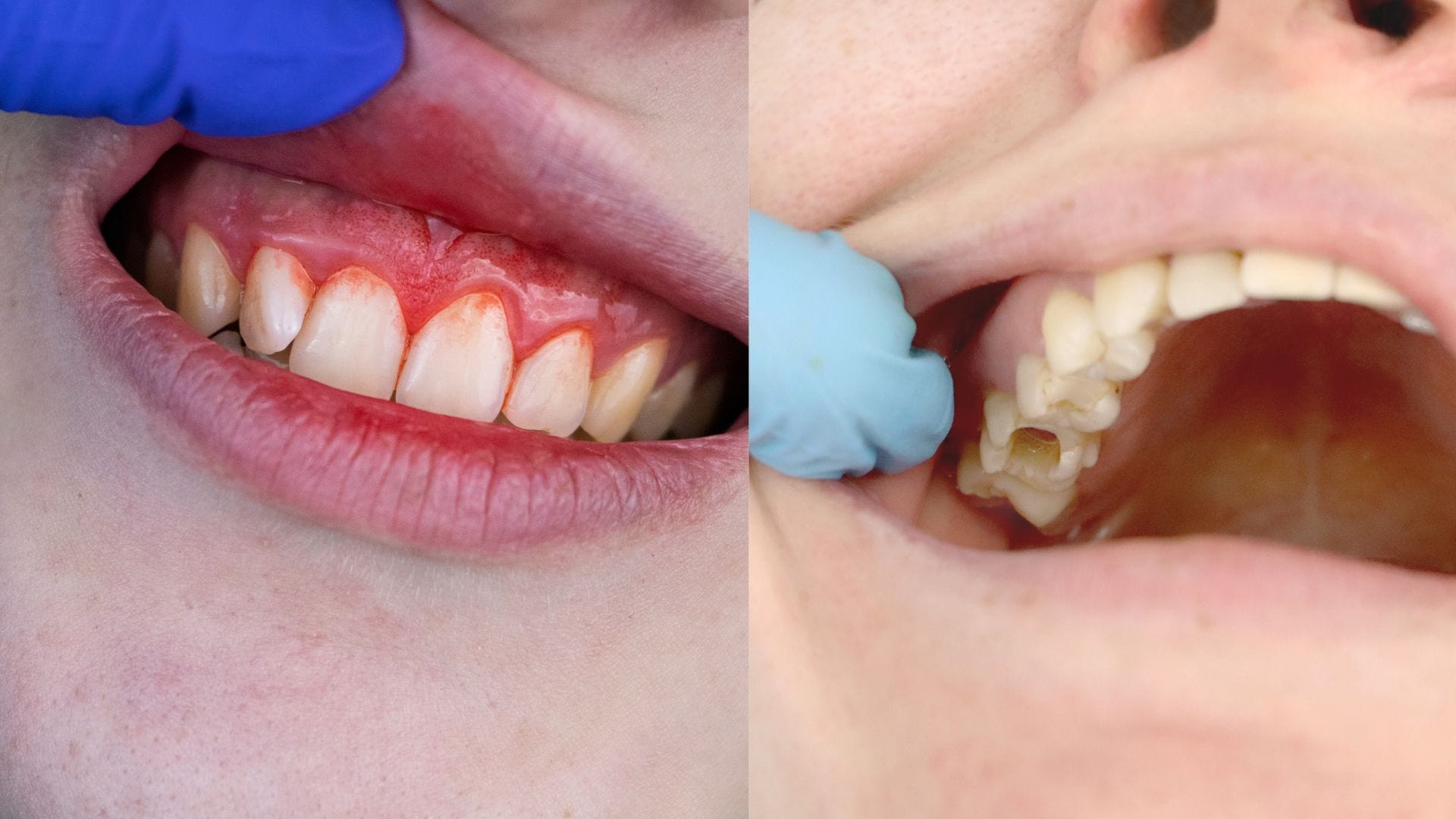
Something hurts in your mouth. You’re not sure if it’s the tooth or the gum, and honestly, it all just feels like one big area of pain. Sound familiar? You’re not alone, and figuring out whether you have a gum infection or a tooth infection actually matters more than you might think.
The treatment is different. The urgency can be different. And getting the wrong diagnosis – even just delaying care – can turn a manageable problem into a serious one.
Here’s what you need to know.
What Is a Tooth Infection?
A tooth infection, also called a dental abscess or abscessed tooth, happens when bacteria invade the inside of the tooth. This typically starts with tooth decay, a crack, or dental trauma that allows bacteria to reach the tooth pulp – the soft tissue inside the tooth that contains the tooth nerve and blood vessels.
Once infection takes hold inside the tooth, pus builds up. This is known as a periapical abscess, meaning the infection forms at the tip of the tooth root. Pressure builds, and that is usually where the severe, throbbing tooth pain comes from.
Common Tooth Infection Symptoms
Tooth infections and abscesses tend to produce some very specific signs:
- Intense, persistent tooth pain that may radiate to the jaw or ear
- Swelling in the cheek or face
- Fever and swollen lymph nodes (lymphadenopathy)
- A bitter taste in your mouth from draining pus
- Sensitivity to hot or cold (tooth sensitivity)
- Pain when chewing or biting down on one tooth
If you notice a pimple-like bump on the gum beside the tooth, that is often the abscess draining.
It means the bacterial infection inside the tooth has already created a pathway outward.
What Is a Gum Infection?
A gum infection is different. It originates in the gum tissue or the structures surrounding the tooth, rather than inside the tooth itself. The most common culprit is advanced gum disease, also called periodontal disease, which starts as gingivitis and can progress into a deeper periodontal infection.
When dental plaque and calculus (dental tartar) build up along and below the gumline, bacteria inflame and damage the soft tissue and bone around the tooth. A gum abscess – also called a periodontal abscess – forms in the gum pocket beside the tooth rather than at the root of the tooth.
Common Gum Infection Symptoms
Gum problems from infection tend to look and feel a little different from a tooth infection:
- Gum pain, tenderness, or swelling localized to the gum area
- Bleeding on probing or during tooth brushing
- A bad taste in the mouth or persistent bad breath
- Visible pus near the gumline around the tooth
- Gum recession and tooth mobility in more advanced cases
- Sensitivity when touching the gum, not necessarily the specific tooth itself
One distinguishing feature: with a periodontal abscess, the tooth itself may feel relatively okay, but the tissue surrounding the tooth is clearly inflamed and sore.
Gum Infection Vs Tooth Infection: The Key Differences
So how do you tell the difference without a dental X-ray? While only a dental professional can give you a definitive diagnosis, here is a general guide:
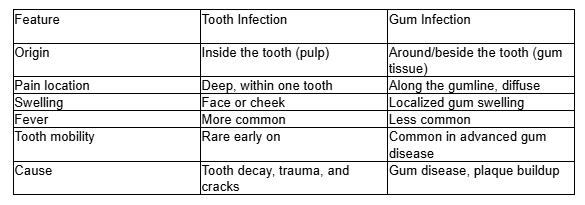
The truth is, tooth and gum infections can look very similar, and sometimes they occur together.
Infection pain can overlap in confusing ways. A dental X-ray (radiograph) is usually necessary to determine whether the infection is at the tip of the tooth root or in the gum pocket beside the tooth.
Why the Difference Matters for Treatment
Getting the right diagnosis means getting the right treatment. A tooth infection typically requires root canal treatment to remove the infection inside the tooth and save the structure. In some cases, dental extraction may be necessary if the infected tooth cannot be saved.
Professional root canal therapy addresses the bacterial infection inside the tooth by removing the pulp, cleaning the canal, and sealing it to prevent re-infection.
A gum infection, on the other hand, is typically treated with scaling and root planing, antibiotic therapy, and improved oral hygiene. Advanced gum disease may require more involved periodontal treatment over time.
Both types of infection can require urgent dental attention, especially if swelling spreads or fever develops. At that point, you should not wait. Visit an emergency dental clinic in Edmonton right away.
Preventing Tooth Infection and Gum Problems
Preventing tooth infection starts with the basics: regular brushing with fluoride toothpaste, daily use of dental floss, reducing sugar intake, and staying on top of professional teeth cleaning appointments.
Good oral hygiene controls dental plaque before it becomes calculus. Routine exams allow your dentist to catch early signs of infection, gum disease, or tooth decay before they escalate into something more painful and expensive.
Comprehensive general dentistry services are your first line of defense against both tooth and gum infections becoming larger problems.
Conclusion
Whether it is a tooth abscess or a gum abscess, a dental infection left untreated will not resolve on its own – it will get worse. Understanding the difference helps you communicate with your dentist and seek the right care faster. If you are dealing with dental pain, swelling, or a bad taste in your mouth, do not wait it out. Reach out to Dr. Molly Rodgers Dental & Associates in Edmonton at 780-463-8803 and let the team help you get to the root of the problem.
